
It’s weird calling a Volkswagen beautiful. None of the brand’s current offerings evoke such a thought, but it wasn’t always this way. Enter the Volkswagen Karmann Ghia, a car that is shocking to see the VW emblem on to this day. The name isn’t very creative, but it works, and it’s informative. This Volkswagen was penned by Ghia, an Italian design company, and was hand-built by Karmann, a German coachbuilder.
The setup made sense. Who better to style a flagship car than an Italian company known for pumping out beautiful designs? The result was a truly gorgeous coupe (and convertible a couple years after), and to make it even better for VW execs, the car was designed on the already-proven Beetle running gear. Using the parts bin for the Karmann Ghia was a double-edged sword, though.
You see, the Beetle was not a fast car, even for its time. It had a miniature flat-four engine, and couldn’t even come close to keeping up with America’s gigantic V8-powered beasts. However, the car’s layout offered something interesting for Americans. Volkswagen put the engine in the back of the car and gave it rear-wheel drive. That’s great fun, but the 40 horsepower in the 1964 Karmann Ghia convertible we just drove would not do well on the dragstrip. The sub-2,000-pound weight makes it feel agile and light, but at no point in the Karmann Ghia’s lifetime was it ever considered to be a sports car.
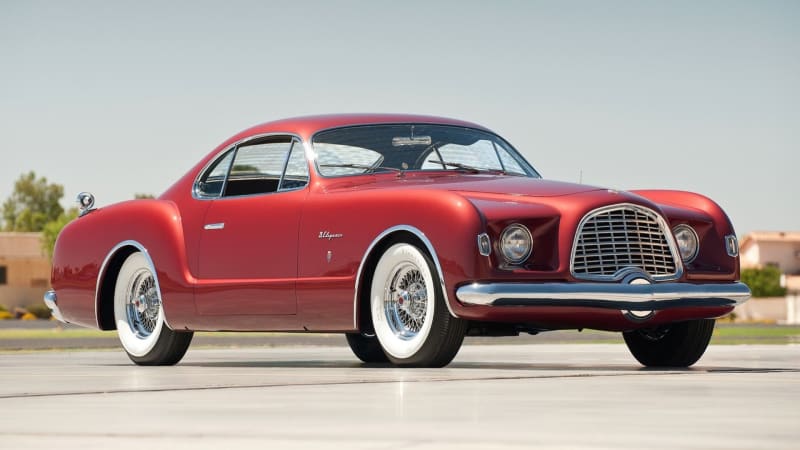
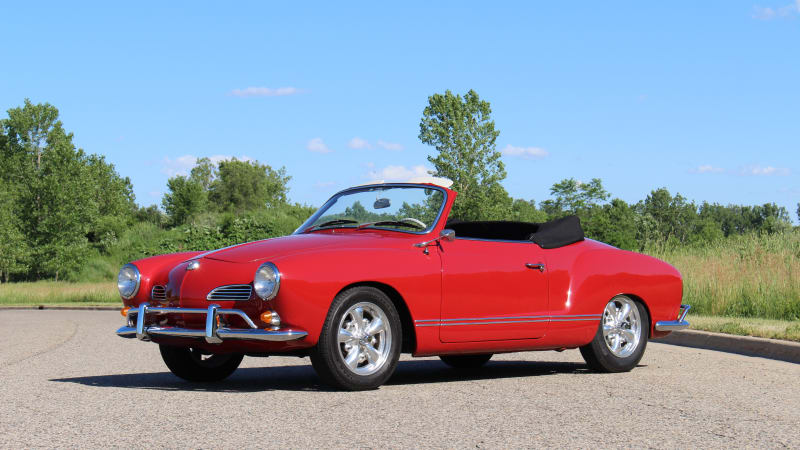
If you’re familiar with the Karmann Ghia story, then you’re probably intimately aware of its resemblance to a certain American concept car: the Chrysler d’Elegance. That concept debuted in 1952, and it was designed by Virgil Exner of Chrysler and built by Ghia. There’s no denying the Karmann Ghia’s design was adapted from the d’Elegance — that kick up from the door into the fender is the most obvious element that’s been copied. Much ink has already been spilled about this entire situation, but the end result is that nobody was flipping tables in the end, even Exner.